Asian Cockpit – Inside the Arena
An asian cockpit is the arena a sabong card is held in: a circular fenced pit at the centre, a betting ring called the ruweda around it, and tiered seating rising away from both. The word names the venue, not the sport.
How a Cockpit Arena Is Laid Out
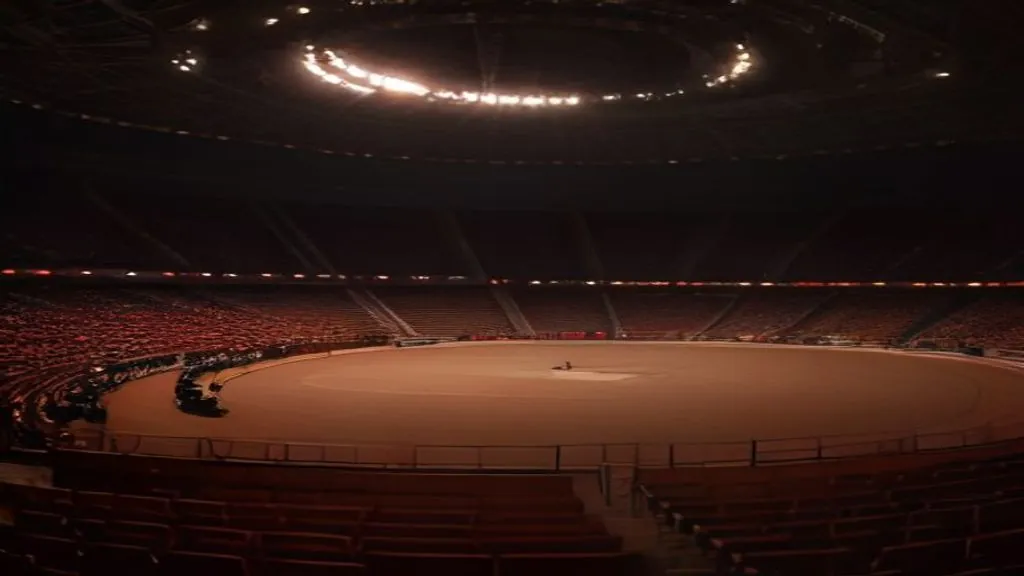
Every cockpit is built as three concentric zones: the pit itself, the ruweda around it, and the stands above. The layout is functional — it exists so that several thousand people can all see a contest that takes place inside a few square metres.
The pit is the enclosed floor at the centre, fenced to about waist height and usually matted. Only the two handlers and the sentensyador are inside it during a sultada. It is small on purpose: the contest is meant to be visible from every seat in the building.
The ruweda is the ring of standing room immediately outside the fence. This is the betting floor, and it is where the kristos operate, taking wagers by hand signal across the noise and holding every one of them in memory. Anyone who has watched a cockpit fill up will tell you the ruweda is the part worth watching before the birds are even released.
The stands rise steeply from there. The gradient is severe by the standards of most sports venues, again for sightlines. In a large arena the upper tiers are far enough from the pit that the crowd follows the sentensyador’s signals as much as the birds.
Behind all of that sit the areas the audience does not see: the holding pens where entries are kept and weighed, and the space where a mananari fits each bird’s tari before it is brought out.
How a Night at the Cockpit Runs
A cockpit night runs in a fixed sequence: entries are weighed and paired at the ulutan, the card is set, and then sultadas run back to back with betting opening and closing around each one.
The ulutan comes first and matters more than casual viewers realise. Roosters are matched on weight and condition so that neither side starts with an obvious advantage, and the quality of that matching determines whether the night produces close contests or a series of one-sided results. Nothing is wagered until the pairings are set.
Once the card is fixed, matches run in sequence. Before each one the ruweda opens, the logro moves as money lands on either side, and betting closes as the birds are brought in. The sultada itself is brief. The sentensyador rules, settlement follows that ruling, and the next pairing is called — a large card can run for hours on that loop.
A night ends when the last sultada is settled rather than at a fixed hour, which is why published sabong start times are reliable but finish times are not.
Local Cockpits and Large Arenas
The difference between a barangay cockpit and a major arena is scale and production, not rules: the same ulutan, the same sentensyador, the same settlement, in front of a few hundred people or several thousand.
A local cockpit is a community venue. It runs on Sundays and fiesta days, the crowd knows each other, and the entries are largely local breeders. A large licensed arena is a different proposition — built for derby events, drawing entries from across the region, with the seating and the holding capacity to run a card that lasts most of a day.
The venues that get streamed are almost always the second kind, because carrying a card properly needs camera positions, lighting and a production gallery that a small venue has no reason to build. How the multi-camera 10x feed is produced covers what that setup actually involves.
Watching Cockpit Sabong Without Going
A stream gives you sightlines no seat in the building can: close angles on the pit, the odds board on screen, and a replay when the result is not obvious from one view.
What it does not give you is the ruweda. The betting floor is the part of a cockpit that does not translate to video — on a stream the kristo’s running memory becomes a betting panel and the hand signals become a stake field. Cleaner, more accountable, and much quieter.
If you want the card without the trip, the practical route is tonight’s live cockpit streams, and the guide to asian sabong itself if the sport is new to you.
Asian Cockpit FAQ
What is an asian cockpit?
A cockpit is the arena a sabong match is held in: a circular fenced pit at the centre, ringed by the betting area and then by tiered seating. The word describes the venue, not the sport — the sport held inside it is sabong.
What is the ruweda in a cockpit?
The ruweda is the betting area immediately surrounding the pit. It is where the kristos work the crowd taking wagers by hand signal, and it is the loudest part of the building in the minutes before a sultada starts.
See also: Full sabong terminology
How many people does a cockpit hold?
It varies enormously. A barangay cockpit may seat a few hundred, while a large licensed arena built for derby events can hold several thousand across its tiers. Capacity is the main thing that separates a local venue from one that hosts televised cards.
Can you visit a cockpit without betting?
Yes. Plenty of people attend to watch, and the venue makes money from entry and concessions as well as from the betting. You will not be able to avoid the betting happening around you, though — the ruweda is the loudest thing in the room.